
Evidence-led. Experience-built.
science and research behind tinnisoothe

Backed by user trials, feasibility studies, expert advisors, and ongoing clinical research, this is the science and thinking behind TinniSoothe.
A Proven Technique. A Unique Approach.
Sound therapy is one of the most widely recognised approaches to tinnitus management. The principle is simple: introducing gentle, consistent sound can help reduce the contrast between tinnitus and silence, making tinnitus feel less intrusive over time.
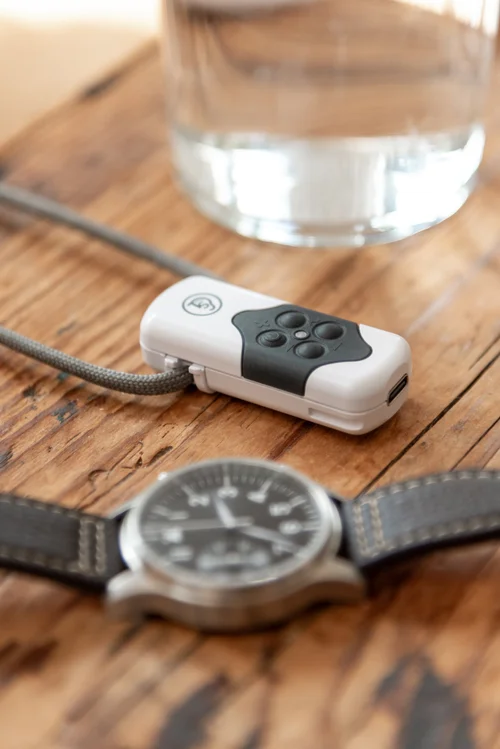
TinniSoothe was designed around that principle, but with a different approach to delivery. Instead of relying on earbuds, phone apps, Bluetooth speakers or in-ear devices, TinniSoothe provides gentle white noise from a small wearable device during the day and a bedside dock at night.
The aim is not to block tinnitus out, or to promise a cure. The aim is to make sound therapy easier to use consistently in real life, supporting habituation by helping tinnitus become less dominant in the background of daily life.
What The Experts Say

“People who have tinnitus often report that it is more noticeable and bothersome in a quiet environment, and that listening to other sounds can make it less intrusive. Sound can either help distract you from your tinnitus, or help your brain to become more used to it, and eventually able to ignore it. This is called habituation. Using sound continues to be a standard part of the toolbox of tinnitus management strategies.”
Tinnitus UK

“In general, sound therapy refers to the use of external sound to alter a patient’s perception of - or reaction to - tinnitus. Like other tinnitus treatments, sound therapies do not cure the condition, but they may significantly lower the perceived burden and intensity of tinnitus.”
American Tinnitus Association
Where TinniSoothe Comes In
Sound therapy is not new. It is a well-recognised approach used in tinnitus management to reduce the contrast between tinnitus and silence, and to help people become less aware of their tinnitus over time.
TinniSoothe is built around that established principle, but with a different delivery method: gentle sound enrichment that can be used through the day and at night, without anything in or around the ears.
The aim is not to block tinnitus out, or to promise a cure. The aim is to make sound therapy easier to use consistently in real life, supporting habituation by helping tinnitus become less dominant in the background of daily life.

The principle
Sound can reduce contrast
Tinnitus often feels more intrusive in quiet environments. Adding gentle background sound can reduce that contrast, making tinnitus feel less stark and less dominant.
The mechanism
Distraction and habituation
Sound-based therapies function on four general mechanisms of action known as: masking, distraction, habituation and neuromodulation (Henry et al., 2008; Newman & Sandridge, 2012).
The aim
Support habituation over time
Sound therapy is generally used to support habituation, helping the brain gradually treat tinnitus as less important rather than something that needs constant attention.

Practice guidance
Helping You Habituate To Tinnitus
Used as recommended, TinniSoothe has been designed to be effective with two of these general mechanisms:
Distraction: using external sound to divert a patient’s attention from the sound of tinnitus
Habituation: helping the patient’s brain reclassify tinnitus as an unimportant sound that can and should be consciously ignored
To achieve long-term habituation, we do not recommend using TinniSoothe for extended periods of masking, consistent with the British Society of Audiology’s published Practice Guidance: “Sound enrichment should be used at a level that is a little quieter than the tinnitus sound. Some people have used masking (loud noise which covers the tinnitus) but this does not encourage habituation and the tinnitus can appear loud when the masking is removed.”
TinniSoothe - Built On Evidence
The evidence behind TinniSoothe comes from three places: the people who use it, independent researchers who've studied it, and clinical trials that have put it to the test. TinniSoothe is a Class I registered medical device - and we hold ourselves to the standards that come with that.

What Our Users Say
2024 - TinniSoothe trial user study: 80% of participants said they would recommend TinniSoothe to friends and family. Most reported feeling calmer, less anxious, and more in control of their tinnitus.

Independently Studied
2025 - A published, peer-reviewed feasibility study by the Combat Stress Centre for Applied Military Health Research independently validated TinniSoothe as a safe and effective sound therapy device.
Clinical Evidence
2026 - A completely independent clinical trial of TinniSoothe is complete. The results will be published in Q3 - another step in our commitment to building the strongest possible evidence base for our users.
Combat Stress Feasibility Study

Feasibility Study
The Combat Stress Centre for Applied Military Health Research
Study conducted with UK military veterans living with tinnitus
In our trial, all participants used the device for a one-month intervention period, with no dropouts or serious adverse events. The majority of participants elected to keep the device and 80% reported they would recommend it to friends and family.
This device is designed to provide comfortable and discreet relief of tinnitus symptoms using sound therapy.
The State Of The Science
Many research studies and scientific papers have been published on the efficacy of sound therapy.
As early as 1903, a physician called Spaulding used a piano to match the frequency of tinnitus in his patients. He increased the volume of the note until their tinnitus became inaudible to the patient.
In 1993, Jastreboff and McKinney introduced the theory of “habituation of the disordered auditory system” and used low-level sounds to help improve a person’s tinnitus.
2020 Review
In 2020, Wang et al. published an holistic review of the ‘state of the art’ across the various types and forms of sound therapy, in the publication Therapeutic Advances in Chronic Disease.
The article abstract can be viewed online at the NIH’s National Library of Medicine:
“there are various forms of sound therapy, and most of them show positive therapeutic effects. The effect of customized sound therapy is generally better than that of non-customized sound therapy, and patients with more severe initial tinnitus respond better to sound therapy.”
Why this matters
In the past, white noise has been presented as a ‘broadband noise’, a rather blunt tool for managing tinnitus. It’s one of the reasons we made TinniSoothe so configurable, with 60 micro-settings for volume and 40 micro-settings for frequency. Most users will be able to configure the device so that the sound is slightly below the level of their tinnitus, aiding distraction.
Meet Our Clinical Advisory Board
In 2025 we launched our Clinical Advisory Board to bring together respected clinicians across audiology, psychology, and hearing care. As independent advisors to TinniSoothe, their insight helps to shape our research strategy, guide our innovation, and strengthen our support for the tinnitus community.




Ready to try TinniSoothe?
TinniSoothe was designed to make sound therapy easier to live with - discreet by day, ready by night, and with nothing in or around your ears. Try it at home, use it in real life, and see whether it helps you feel calmer and more in control.
30-day money-back guarantee. Free UK delivery.


Winner - 2025 Hearing
Technology Innovator

Class 1 Medical device

Independently Assessed
by Tinnitus UK

Made in Britain

30-Day Money Back
Guarantee