
Sleep disruption is one of the most commonly reported quality-of-life impacts of chronic tinnitus. For many people, the quiet of night makes internal sounds such as ringing, buzzing or hissing more noticeable, making it harder to relax and fall asleep. Poor sleep can then increase stress, fatigue and emotional sensitivity - which in turn can make tinnitus feel louder or more intrusive. This cycle can feel frustrating and difficult to break.
Sleep and Tinnitus
A Science-Backed Path to More Restful Nights
This article explains how tinnitus and sleep are connected, why sleep disruption is so common among people with tinnitus, and which evidence-based strategies - including sound enrichment and supportive devices such as TinniSoothe - may help improve sleep quality.

What Science Tells Us About Tinnitus and Sleep

Until recently, tinnitus and sleep were often studied separately. However, emerging neuroscience suggests they are more closely linked than once thought.
A major interdisciplinary review led by researchers at the University of Oxford, titled “Tinnitus: at a crossroad between phantom perception and sleep”, highlights a fundamental interaction between tinnitus-related brain activity and the brain processes that regulate sleep. The researchers describe tinnitus as a phantom percept - sound generated internally by abnormal neural activity rather than an external source.
During healthy sleep, particularly non-rapid eye movement (NREM) sleep, the brain produces slow, synchronised electrical activity that suppresses spontaneous firing across many cortical regions. The Oxford team propose that tinnitus may persist because the same brain networks involved in auditory perception and arousal do not fully “switch off” during sleep.
As first author Linus Milinski explains, “It could explain why interrupted sleep is such a common symptom in tinnitus patients.” The authors also suggest that deeper sleep, when slow-wave activity is strongest, may temporarily dampen tinnitus-related neural activity - potentially explaining why some people notice periods of relief during the night.
This research does not suggest that sleep problems cause tinnitus, or that sleep alone can cure it. Instead, it reinforces the idea that supporting healthy sleep may reduce how intrusive tinnitus feels and improve overall wellbeing.
Evidence-Informed Strategies That Help Many People
While there is no single solution that works for everyone, clinical guidance and patient experience point to several approaches that often help.
1. Keep Sleep Times Consistent
Going to bed and waking up at roughly the same time each day helps regulate your circadian rhythm. A predictable pre-sleep routine - such as light reading, gentle stretching or relaxation exercises - signals to the brain that it is time to wind down.
Consistency matters more than perfection. Even small improvements can help the brain transition more easily into sleep.
2. Reduce Silence with Sound Enrichment
Complete silence can make tinnitus more noticeable by increasing the contrast between internal sound and the environment. Many specialists therefore recommend sound enrichment - gentle background sound that gives the brain something neutral to focus on.
This might include white noise, nature sounds, a fan, or other low-level ambient audio.
TinniSoothe fits within this approach.
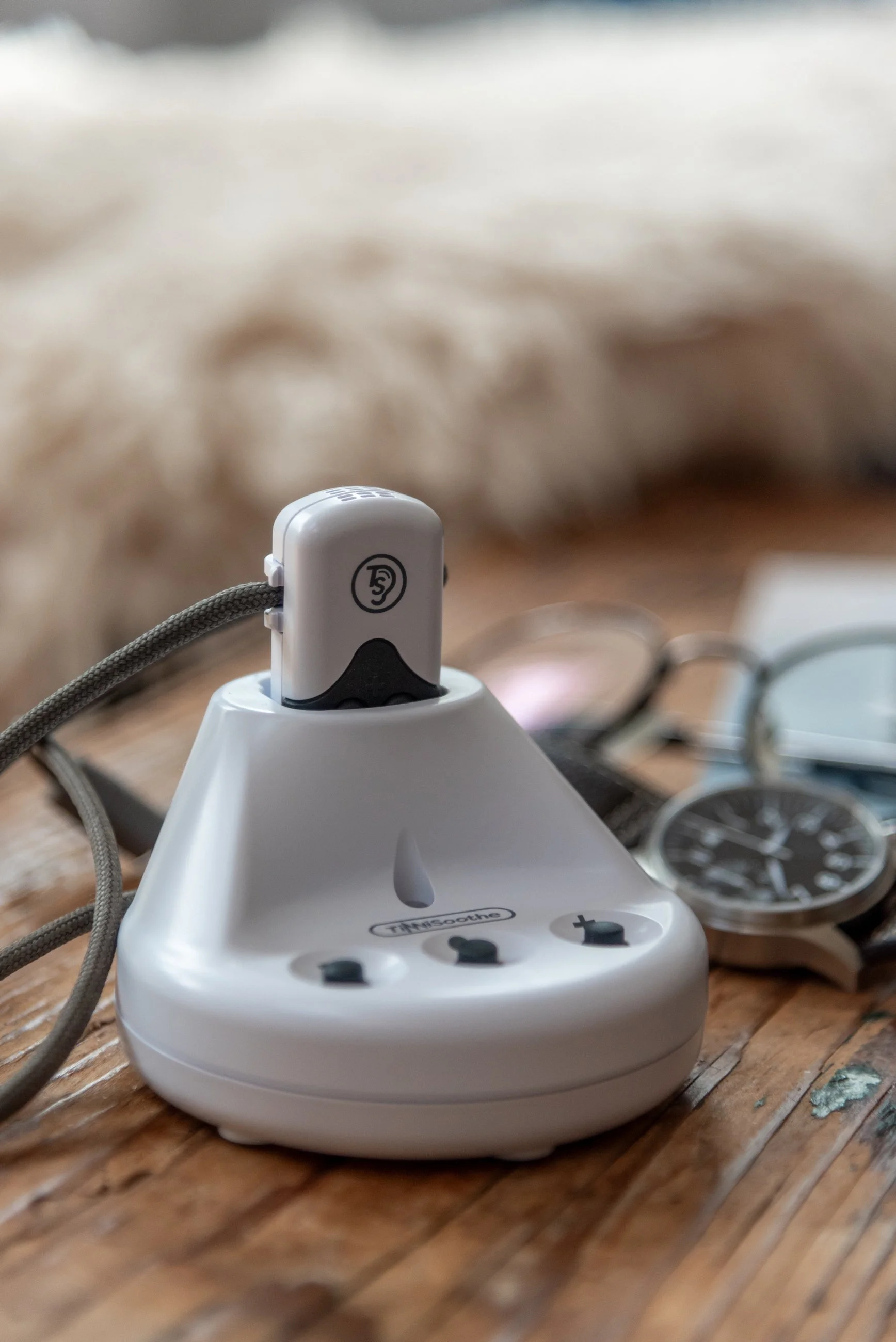
TinniSoothe is a wearable sound-support device designed to provide gentle auditory enrichment for people with tinnitus, particularly during rest and sleep. By reducing silence rather than masking tinnitus aggressively, it can help create a calmer sound environment that supports relaxation and sleep onset.
3. Support Deeper, Restorative Sleep
Sleep occurs in stages, cycling from lighter sleep into deeper slow-wave sleep. Deeper stages are associated with reduced brain arousal and may help dampen tinnitus-related neural activity.
Habits that support deeper sleep include:
Keeping the bedroom cool, dark and quiet
Avoiding caffeine and nicotine in the evening
Limiting screen use before bed
These changes help the nervous system shift out of alert mode and into rest.
4. Calm the Mind Before Bed
Tinnitus can trigger worry or frustration, especially at night. Techniques such as slow breathing, mindfulness exercises, progressive muscle relaxation, or writing down thoughts before bed can help reduce mental hyperarousal.
Reducing stress does not eliminate tinnitus, but it often makes it feel less dominant and easier to live with.
5. Avoid Forcing Sleep
If you are unable to fall asleep after around 20 minutes, it can help to get out of bed and do something quiet and restful until you feel sleepy again. This helps the brain associate the bed with sleep rather than wakefulness or frustration.
Where TinniSoothe Fits into a Broader Approach
TinniSoothe is not a cure for tinnitus, but it can be a helpful part of a wider sleep strategy.
Used alongside good sleep habits, it offers:
Gentle sound enrichment to reduce silence
A low-disruption option suitable for bedtime routines
Support for relaxation without overstimulation
A wearable option for continued daytime relief
For many people, this combination helps make sleep feel more achievable and less stressful.
Final Thoughts
Scientific research increasingly shows that tinnitus and sleep are not separate problems but interacting processes within the brain. Improving sleep quality may not remove tinnitus, but it often reduces its emotional and cognitive impact - helping people feel more rested, resilient and in control.
This article is intended for general information and support. Tinnitus affects people differently, and persistent sleep disturbance, anxiety or low mood should always be discussed with a qualified healthcare professional.
With the right combination of habits, support and tools, better nights - and better days - are possible.
TinniSoothe: Recognised by those who matter…
Registered as a Class 1 medical device
Winner - 2025 Hearing Technology Innovator


Manufactured with care
Reviewed independently

